

Direct answer: Diwali Lakshmi Puja falls on Sunday, 8 November 2026. For New Delhi, Drik Panchang lists the Lakshmi Puja window as 5:54 pm–7:50 pm; the correct muhurat changes by city, so always select your location before relying on a time. In the puja itself, dhupa (धूप, incense) is one offering alongside the lamp, flowers, water and naivedya (नैवेद्य, food offering). Choose dhoop or agarbatti whose disclosed ingredients and format suit your household practice—but do not treat one incense stick as a replacement for every physical puja item.
At Ishvarya, our guiding thought is simple: puja with authentic ingredients. This is our brand philosophy, not a dictionary translation or religious certification. We create a puja-samagri-inspired alternative for the incense portion of worship: a considered way to choose dhoop or agarbatti when incense is already part of your ritual.
When is Diwali Puja in 2026?
For New Delhi, the 2026 Diwali calendar places Dhanteras on Friday, 6 November; Kali Chaudas on Saturday, 7 November; Narak Chaturdashi and Lakshmi Puja on Sunday, 8 November; Govardhan Puja on Tuesday, 10 November; and Bhaiya Dooj on Wednesday, 11 November. The one-day gap before Govardhan Puja follows the lunar-tithi calculation; it is not a missing festival day.
The same source explains that Lakshmi Puja is performed after sunset in Pradosh Kaal, with the preferred window calculated for the city and the prevailing tithi. New Delhi’s 5:54 pm–7:50 pm window must therefore not be copied as a pan-India time. Gurgaon, Kolkata, Mumbai, Bengaluru and other cities have their own local windows.
Why is dhoop used in puja?
Incense has a distinct place within worship. In the Śrīmad-Bhāgavatam 11.27.33, incense and lamps appear alongside other offerings rather than as substitutes for them. The Bhagavad Gita 9.26 separately speaks of a leaf, flower, fruit or water offered with devotion. Read together, these passages support a careful principle: the materials and acts of worship have their own roles, while devotion remains central.
This is the scriptural context. The exact Lakshmi–Ganesha arrangement, mantra sequence, regional substitutions and family customs belong to living practice. Your family may use a full shodashopachara sequence, a shorter household puja, a community method, or instructions received from a purohit. Follow that lineage rather than treating an online checklist as a universal rule.
A practical Diwali puja samagri checklist
This is a preparation aid, not a mandatory inventory. Remove, add or substitute items according to your family, sampradaya, region and the advice of your priest or elders.
| Common item | Hindi / Sanskrit term | Practical role |
|---|---|---|
| Clean worship surface, cloth, murti or image | चौकी, वस्त्र, मूर्ति / चित्र | Creates the focus and setting for worship; arrangement varies. |
| Water and a small vessel | जल, कलश / लोटा | Used in different ways according to the chosen puja method. |
| Roli or kumkum and unbroken rice | रोली / कुमकुम, अक्षत | Commonly used for tilak and offering; not identical in every tradition. |
| Fresh flowers or leaves | पुष्प, पत्र | Offered separately where customary. |
| Lamp, wick and suitable oil or ghee | दीप, बाती, तेल / घृत | The dipa or light offering; keep it distinct from incense. |
| Dhoop or agarbatti with a proper holder | धूप / अगरबत्ती | The incense offering. One format is sufficient unless your household practice says otherwise. |
| Fruit, sweets or household food offering | फल, मिष्ठान, नैवेद्य / भोग | Offered separately and later shared as prasad according to practice. |
| Bell, camphor and aarti plate | घंटी, कपूर, आरती थाली | Common in many homes, but the exact aarti method varies. |
Dhoop, agarbatti—or both?
You do not need to use both merely because both are sold. Dhoop is usually a solid, bambooless incense format with no bamboo core. Agarbatti commonly uses a bamboo core. Each produces a different burn and sensory experience; neither format automatically carries greater religious authority.
Choose on practical and transparent grounds:
- Check what is physically present. An ingredient declaration is different from a fragrance note. A floral aroma does not by itself prove that the named flower is in the formula.
- Check the format and holder. Use a holder designed for the actual thickness and form of the stick.
- Check the ritual fit. A deity-inspired blend is an optional way to align the incense portion of worship with offering traditions; it is not a new religious obligation.
- Check claims carefully. “Organic” and “gentle smoke” are owner-approved Ishvarya descriptions, not independent certification, emissions testing or a promise of harmless smoke.
Which dhoop can you choose for Lakshmi–Ganesha puja?
There is no universal scriptural rule requiring a branded dhoop or a separate commercial blend for each deity. If your household uses incense during Diwali puja, you may choose a familiar family fragrance, an unscented traditional preparation, or an ingredient-led blend that is clearly described.
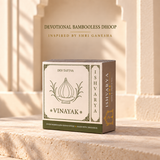
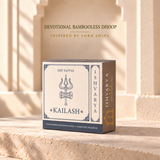
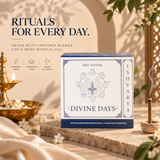
Within Ishvarya, Padma is inspired by Maa Lakshmi, while Vinayak is inspired by Shri Ganesha. The Shubh Deepavali box is the festival assortment: the current product page lists two 24 mm dhoop sticks, twenty 12 mm sticks—ten Vinayak and ten Padma—and one 12 mm holder. These are product choices for the incense offering; flowers, diya, water, naivedya and other family samagri remain separate.
When should dhoop be lit?
In a commonly used five-offering structure, fragrance or sandalwood, flowers, incense, lamp and food are offered as distinct steps. If your family follows this order, dhoop is lit at the dhupa step before the lamp and naivedya. Some homes follow a different sequence or a fuller puja. Keep your inherited order, and use a local, city-specific panchang for the muhurat rather than a generic national time.
Do not turn the five-day festival into a forced product schedule. Dhanteras, Kali Chaudas or Narak Chaturdashi, Lakshmi Puja, Govardhan Puja and Bhaiya Dooj have different observances. Incense can accompany worship where customary, but it does not replace Yama Deepam, Abhyang Snan, Annakut, Bhai Dooj tilak or any other distinct observance.
How to use incense carefully during Diwali
- Place the correct holder on a stable, heat-resistant surface.
- Keep dhoop, agarbatti, diya and camphor away from curtains, paper, loose clothing, children and pets.
- Light the tip, allow it to catch, then extinguish the flame so the incense smoulders as directed on the pack.
- Keep the room ventilated and avoid crowded clusters of burning products.
- Never leave burning incense, diya or camphor unattended; extinguish it fully before leaving or sleeping.
Frequently asked questions
What is the Diwali date in 2026?
Lakshmi Puja and Diwali fall on Sunday, 8 November 2026 in the cited New Delhi calendar. Festival dates and muhurat should be checked for your location.
What is the Lakshmi Puja time in New Delhi?
Drik Panchang lists 5:54 pm–7:50 pm on 8 November 2026 for New Delhi. Do not use this as the time for every city.
Is dhoop part of Diwali puja samagri?
Dhoop or incense is commonly included as the dhupa offering. Scripture also lists incense and lamps among distinct offerings, but the exact household list and sequence vary.
Should I use dhoop or agarbatti for Lakshmi Puja?
Either may be used where incense forms part of your practice. Choose the format your household prefers and use a compatible holder.
Can one dhoop stick replace flowers, diya, water or naivedya?
No. An incense product may contain selected ingredients associated with worship, but it does not replace every physical item or ritual act.
Does “gentle smoke” mean certified safe smoke?
No. It is owner-approved sensory wording, not a certification, medical claim or proof of harmless emissions. Follow fire-safety directions and ventilate the room.
Sources and context
- Drik Panchang: 2026 Lakshmi Puja for New Delhi — date, New Delhi muhurat and city-specific timing principle.
- Drik Panchang: 2026 Diwali Puja calendar — festival sequence and Pradosh context.
- Drik Panchang: Govardhan Puja 2026 and Bhai Dooj 2026 — New Delhi dates.
- Śrīmad-Bhāgavatam 11.27.33 — incense and lamps within a wider set of offerings; cited in its Vaishnava deity-worship context.
- Bhagavad Gita 9.26 — leaf, flower, fruit or water offered with devotion; not a branded-product prescription.
- London Fire Brigade: candles, incense and diya safety — stable, heat-resistant holders and constant supervision.
Editorial boundary: Calendar publishers apply a location and panchang method; families and regions may follow different traditions. A religious reference establishes ritual context, not the ingredients of an Ishvarya SKU. Product composition must be established through current formulation and production records.
Author: Ishvarya Editorial Team. Source check: 22 October 2026. This guide distinguishes scriptural context, local calendar calculations and family practice.